
Choosing to have breast augmentation is a personal decision. For some women, it may be about restoring volume lost after pregnancy or weight loss. For others, it may be about feeling more proportionate in their clothes or simply achieving a breast shape and size that feels more like them.
Whatever your reason, I believe the consultation should be about much more than choosing an implant.
It is an opportunity for us to understand what you would like to change, what you like about your breasts already, and what you would ideally like to achieve. My role is then to explain what is realistically achievable for you and how we can work towards that result safely.
One of the questions I am asked most frequently is:
“What size implant should I have?”
The answer is rarely as simple as choosing a number.
Start by thinking about the result you would like
Before your consultation, I recommend spending some time thinking about what you would like your breasts to look and feel like after surgery.
You may want:
- A subtle increase in breast volume
- More fullness following pregnancy or breastfeeding
- A fuller upper pole
- Greater cleavage
- A more rounded breast shape
- A noticeable but still proportionate augmentation
- A fuller, more obviously augmented appearance
You may also simply feel that your breasts are too small in relation to the rest of your body.
There is no right or wrong answer.
What matters is that I understand your personal aesthetic preference.
Bring photographs of breasts that you like
One of the most useful things you can bring to your consultation is a small selection of photographs.
These do not need to be photographs of patients who have exactly the same anatomy as you. In fact, it is often more helpful to use them to demonstrate the style of result you prefer.
When looking at photographs, ask yourself:
What is it that I like about this result?
Is it the:
- Overall size?
- Breast shape?
- Upper-pole fullness?
- Cleavage?
- Projection from the side?
- Natural appearance?
- More rounded or augmented appearance?
A photograph is a useful way of communicating your aspirations, but it is important to understand that your result cannot simply be copied from another woman.
Every breast is different.
Your chest width, breast tissue, skin quality, nipple position and existing breast shape all influence what can be achieved.
Don’t worry if you don’t know what implant size you want
You do not need to arrive at your consultation having decided that you want a 300cc, 350cc or 400cc implant.
In fact, I would encourage you not to become too focused on the number.
Implant volume is only one part of the equation.
Two implants with the same volume can have different widths and projections and can therefore create quite different results.
Instead of starting with a number, I prefer to start with you.
I will assess your individual anatomy and then discuss the range of implant options that may be appropriate.
How much bigger would you like to be?
This is an important question to think about before your consultation.
Some women want a relatively modest change:
“I want people to notice that I look better, but not necessarily know that I have had surgery.”
Others want a more noticeable increase:
“I want my breasts to be significantly fuller and to have more cleavage.”
Both are perfectly reasonable objectives.
The important thing is that we establish where you sit on this spectrum.
A useful way to think about it
Rather than thinking solely in terms of cup size, consider whether you would describe your desired change as:
Subtle
A modest increase in volume with an emphasis on maintaining a very natural appearance.
Moderate
A clearly fuller breast with increased volume and some additional upper-pole fullness, while maintaining overall proportion.
Fuller
A more noticeable augmentation with greater projection and breast volume.
Very full
A deliberately more prominent augmented appearance.
This gives us a much better starting point for discussion than simply saying, “I want to be a D cup.”
Why I don’t usually recommend choosing your implant by cup size
Bra sizing is surprisingly inconsistent.
The same woman can wear different cup sizes depending on the manufacturer, style and band size. Consequently, saying that you want to increase by one or two cup sizes does not give me a sufficiently precise surgical target.
Instead, I consider your:
- Chest width
- Existing breast width
- Existing breast volume
- Breast tissue thickness
- Skin quality
- Nipple position
- Breast shape
- Degree of asymmetry
- Desired projection
- Overall body proportions
These measurements help determine the range of implant dimensions that are likely to suit you.
The final decision is therefore a combination of your preferences and what your anatomy will safely accommodate.
Your body proportions matter
A breast implant does not exist in isolation.
The result needs to work with your shoulders, ribcage, waist and overall body proportions.
An implant that looks beautifully proportionate on one woman may look too large—or surprisingly subtle—on another.
This is why I don’t believe there is a universally ideal implant size.
The right implant is the one that works with your anatomy and gives you the appearance you are looking for.
Think about how you want your breasts to look from the side
It is easy to focus on the view from the front, particularly when looking at photographs online.
However, the side view is equally important.
Think about how much projection you would like and whether you prefer:
- A gentle, natural slope from the chest onto the breast
- More upper-pole fullness
- A rounder appearance
- Greater projection
These characteristics are influenced by implant dimensions and profile, as well as the position of the implant and your existing breast tissues.
This is something we can discuss in detail during your consultation.
What about cleavage?
Cleavage is another common consideration.
Breast augmentation can increase breast volume and may enhance cleavage, but the amount of cleavage that can be achieved depends significantly on your natural anatomy.
The distance between your breasts, the position of the breast tissue on your chest wall and the shape of your ribcage all play a role.
An implant cannot simply be used to force the breasts closer together.
My priority is to create a result that is attractive and proportionate rather than compromising the natural position of your breasts in pursuit of excessive cleavage.
Don’t forget about breast shape
Size is only one component of a successful breast augmentation.
You may be surprised to hear that two women with the same implant volume can have very different results.
The final appearance is influenced by:
Your existing breast shape + implant dimensions + implant position + your tissues + surgical technique.
This is why I place considerable emphasis on examining the breast carefully before recommending an implant.
What if you have had children or lost weight?
Pregnancy, breastfeeding and significant weight loss can change the breast considerably.
You may have lost volume but also developed some degree of skin excess or breast droop.
In this situation, increasing implant size is not necessarily the best solution.
Some women may benefit from an implant alone. Others may achieve a better result from a breast uplift (mastopexy), with or without an implant.
This is something that can only really be assessed by examining you and understanding what you are trying to achieve.
Think about your lifestyle
I also want to understand how your breasts fit into your everyday life.
If you regularly run, attend the gym, play sport or are particularly active, your priorities may be different from someone who is less physically active.
Consider:
- How you would feel about having larger breasts during exercise
- What types of clothing you like to wear
- Whether you want your augmentation to be discreet
- Whether you are comfortable with a more noticeable change
- How important upper-pole fullness is to you
These may seem like small considerations, but they can be important when deciding on the appropriate volume.
What should you bring to your consultation?
I recommend bringing three things.
1. Your expectations
Be honest about what you would like to achieve.
There is no need to worry about whether your preference sounds “too small” or “too large”. My job is to understand what you want and explain what I believe is appropriate for you.
2. A few photographs
Choose perhaps three to five examples of results that you like.
They don’t have to represent exactly what you want. They simply help us understand your aesthetic preferences.
3. Your questions
There is no such thing as an unimportant question when considering surgery.
You may want to ask about:
- Implant size and profile
- Implant placement
- Scarring
- Recovery
- Exercise
- Breastfeeding in the future
- Pregnancy
- Implant longevity
- Implant-related complications
- Breast screening following augmentation
- What happens if you change weight in the future
- What happens if you decide you want your implants removed or changed later
You should leave your consultation feeling that you understand both the benefits and the limitations of surgery.
The largest implant isn’t necessarily the best implant
It can be tempting to think that if a certain volume will fit, choosing a larger implant will give you a better result.
That isn’t necessarily the case.
Larger implants can place greater demands on the breast tissues and, depending on your anatomy, may increase the likelihood of problems such as visible or palpable implant edges, rippling, stretching of the tissues, recurrent drooping or changes in breast shape over time.
This doesn’t mean that larger implants are unsuitable.
It means that size needs to be considered carefully.
My aim is not to put in the largest implant that can physically fit.
My aim is to find the implant that gives you the best balance between your desired appearance, your anatomy and the long-term health of your breast tissues.
What I want you to get from your consultation
I want you to leave your consultation with a clear understanding of three things:
What you want
We need to understand your aesthetic goals.
What is achievable
I will explain what I believe can realistically be achieved given your individual anatomy.
What is appropriate
We then need to decide whether the surgical approach and implant options are appropriate for you.
Sometimes that may mean recommending a particular implant.
Sometimes it may mean suggesting a different surgical approach.
And occasionally, it may mean advising that breast augmentation is not the best way to achieve what you are looking for.
My role is not simply to provide the surgery you ask for. It is to provide an honest, specialist opinion about the surgery that I believe will give you the best possible outcome.
A personalised approach to breast augmentation
Breast augmentation should never be a one-size-fits-all procedure.
For me, the consultation is an important part of the surgery itself. It is where we establish your goals, assess your anatomy and develop a plan that is individual to you.
If you are considering breast augmentation in Birmingham, I would encourage you to come to your consultation with an open mind.
You don’t need to know exactly what implant you want.
You don’t need to know precisely what cup size you want to be.
And you certainly don’t need to have all the answers.
Bring your ideas, your questions and an honest sense of what you would like to change.
I can then help you understand what is realistically achievable and guide you towards an option that is appropriate for your body, your lifestyle and your long-term goals.
The objective is not simply to make your breasts bigger.
It is to create breasts that look and feel right for you.
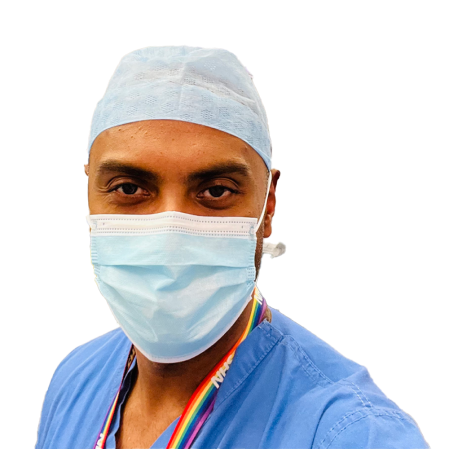
Considering breast augmentation with Dr Seni?
If you are considering cosmetic breast surgery in Birmingham, a consultation with Dr Seni provides an opportunity to discuss your goals in detail and explore whether breast augmentation is right for you.
Your consultation should be a considered conversation—not a sales appointment.
Your body. Your goals. Your decision.
Mr Seni Mylvaganam
Breast Surgeon | Birmingham