Dr Senthurun (Seni) Mylvaganam is an NHS Consultant Oncoplastic Breast Surgeon offering immediate breast reconstruction at the time of mastectomy for breast cancer patients across the West Midlands. He provides a full range of reconstruction options (implant-based and flap-based) with a personalised plan for every patient.
Breast reconstruction will be discussed with all patients who are recommended to have a mastectomy for the treatment of their breast cancer. Not all options and strategies are appropriate for all patients but a bespoke discussion and plan will be discussed. For some patients though immediate breast reconstruction may not be recommended as it may compromise their breast cancer treatment. In that situation breast reconstruction at a delayed point may then be discussed. The key aims of breast reconstruction are volume replacement and symmetry. For many patients, undertaking breast reconstruction will create a different shape and volume to the other non-affected breast. Hence a discussion on symmetry surgery such as an uplift or breast reduction will be undertaken if necessary.
A breast cancer diagnosis brings an enormous amount to process. When mastectomy is part of the recommended treatment, many women are also entitled to a detailed conversation about reconstruction, including whether it can be done at the same time as the cancer surgery.
Immediate breast reconstruction means rebuilding the breast during the same operation as the mastectomy. For the right patients, this approach avoids a second major procedure and allows recovery from both surgeries together. Dr Senthurun (Seni) Mylvaganam, a West Midlands-based consultant oncoplastic breast surgeon, discusses reconstruction with every patient recommended for mastectomy and tailors the plan to each individual’s situation, anatomy, and cancer treatment pathway.
Who Is Immediate Breast Reconstruction Suitable For?
Not every patient will be recommended for immediate reconstruction. The suitability depends on several factors, including the type and stage of breast cancer, whether radiotherapy is likely to be needed after surgery, and the patient’s overall health and personal priorities.
Immediate reconstruction may be less suitable if post-operative radiotherapy is planned, as radiation can affect the final appearance and feel of a reconstructed breast. In these cases, a delayed reconstruction, carried out after cancer treatment is complete, is often the better approach.
Where immediate reconstruction is not possible, a tissue expander can sometimes be placed at the time of mastectomy as a temporary measure, with the final reconstruction completed after treatment.
Reconstruction Options: What Are the Choices?
There are two main approaches to breast reconstruction: implant-based reconstruction and reconstruction using your own tissue (autologous reconstruction). Each has different implications for the length of surgery, recovery, and long-term outcomes. Dr Seni will guide you through which options are realistic for you based on your body, your cancer treatment plan, and your goals.
Implant-Based Reconstruction
Implant-based reconstruction is a silicone implant placed to recreate breast volume. This can be done in a single stage or, where the skin needs stretching first, in two stages using a tissue expander. It generally involves a shorter operation and a quicker initial recovery.
Flap-Based Reconstruction (Using Your Own Tissue)
Flap-based reconstruction refers to tissue taken from elsewhere on the body, most commonly the back (latissimus dorsi flap) or abdomen (TRAM or DIEP flap), that is used to reconstruct the breast. It tends to produce a more natural result over time and is generally more resilient to radiotherapy. The operation is longer, and recovery is more involved than implant-based approaches, but for many patients, the long-term outcome makes it the right choice.
When reconstruction significantly changes the volume or shape of the treated breast, symmetry surgery on the other side, such as a breast uplift or reduction, can also be discussed as part of the overall plan.
Comparison table: Implant vs Flap Reconstruction
| Implant-Based | Flap-Based (Own Tissue) | |
| Operation length | Shorter | Longer |
| Recovery time | Faster initial recovery | Longer recovery |
| Scar sites | Breast only | Breast + donor site (back or abdomen) |
| Natural feel over time | Variable | Generally more natural |
| Suitability with radiotherapy | Can be affected by radiation | More resilient to radiation |
| Two-stage option | Yes (expander first) | Sometimes |
Real Cases: What Reconstruction Looks Like in Practice
Every reconstruction is different. The cases below are drawn from actual patients treated by Dr Seni and illustrate how the approach is adapted to individual circumstances. Results vary between patients, and individual outcomes will be discussed at the consultation.
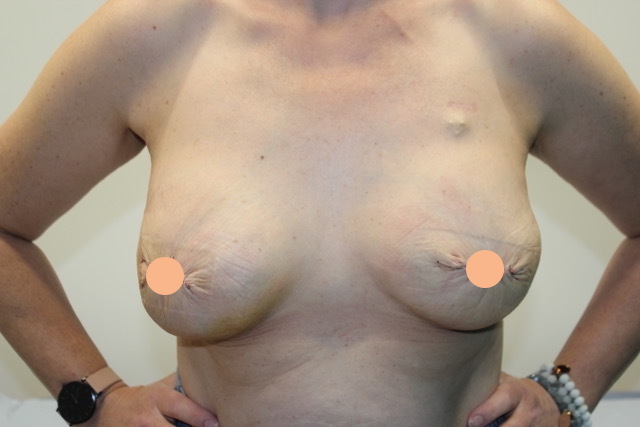
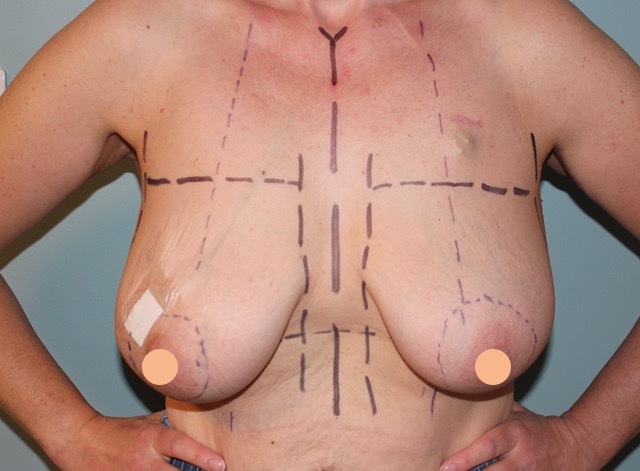
Case 1: Breast-Conserving Surgery With Oncoplastic Reshaping


A patient with right-sided breast cancer was treated with breast-conserving surgery. To avoid a visible defect from the tissue removed and to maintain symmetry, bilateral mammaplasties were performed as part of the same oncoplastic procedure. The approach allowed the cancer to be removed with clear margins while preserving breast shape on both sides.
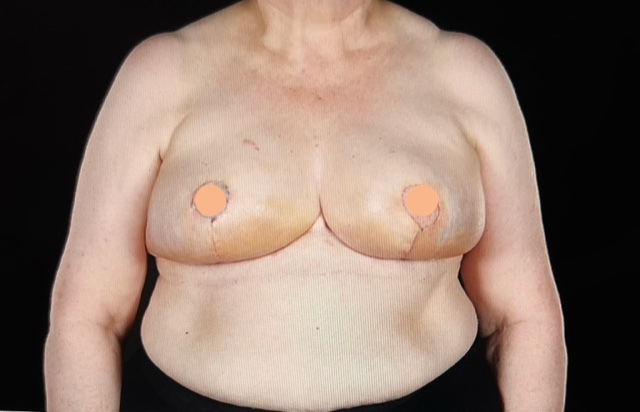
Case 2: Nipple-Sparing Mastectomy With Immediate Implant Reconstruction


A patient with recurrent right breast cancer, having previously undergone breast-conserving surgery with an upper outer quadrant scar, was treated with a nipple-sparing mastectomy. The procedure used an inframammary scar to minimise visible scarring, with immediate implant reconstruction carried out at the same time.
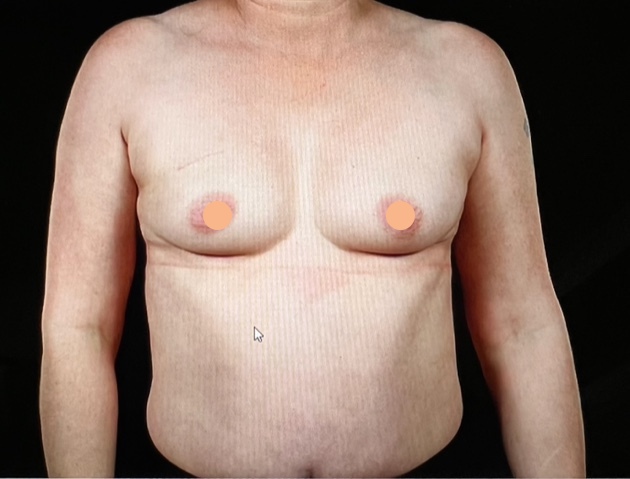
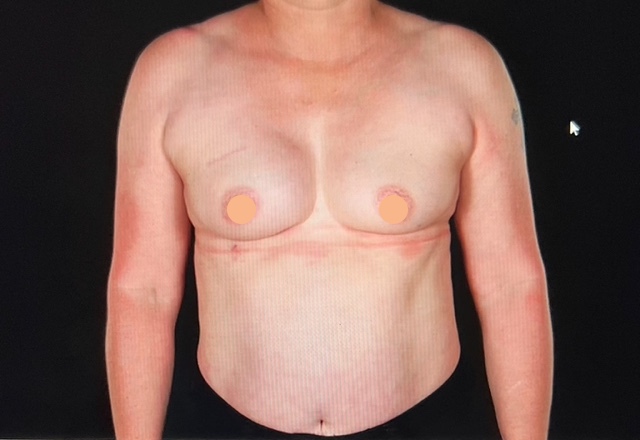
Case 3: Mastectomy With Immediate Reconstruction (3-Month Outcome)


The key options for breast reconstruction are either the use of an implant or your own tissue (usually the back flap or the tummy flap). Each of these options have differences in the length of surgery, length of recovery and risks. There will also be certain occasions where some of these options may not be suitable at the time of mastectomy due to the need for cancer treatments after surgery. In this instance a 2 stage reconstruction can be undertaken where a temporary reconstruction is first done and then after further cancer treatments the final reconstruction can then be completed.
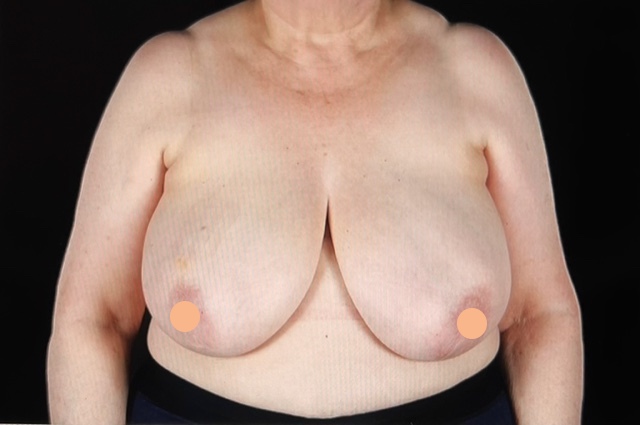
A further case demonstrates the progression from pre-operative planning through to the three-month post-operative result following mastectomy with immediate reconstruction. The three-month point is when much of the initial swelling has settled, and the shape of the reconstruction becomes clearer, though the final result continues to develop over a longer period.
What to Expect at Your Consultation
Dr Seni conducts all consultations personally. The discussion covers your diagnosis and recommended surgical treatment, the reconstruction techniques that are suitable for you, what each option involves in terms of surgery and recovery, and an honest account of the expected cosmetic outcome and associated risks.
You will not be expected to make a decision on the day. The aim is to give you a complete picture so that you can make a choice that fits your circumstances.
“Every patient’s situation is different, and so is every reconstruction plan. My job in the consultation is to make sure you understand all of your options clearly, so that whatever you decide feels right for you.”
Dr Seni, Consultant Oncoplastic Breast Surgeon
Dr Seni operates across the West Midlands, seeing patients at Spire Parkway Hospital Solihull and Nuffield Health Wolverhampton, and accepts referrals from patients across central and southern England.
Taking the Next Step
Understanding your reconstruction options before surgery gives you time to ask questions, consider what matters most to you, and arrive at a decision with confidence. For many patients, that conversation is one of the most important parts of the whole process.
If a mastectomy has been recommended as part of your treatment, you are entitled to a full discussion about reconstruction. Appointments with Dr Seni are available at Spire Parkway Hospital Solihull and Nuffield Health Wolverhampton. To book, call 07462 855529 or use the contact form on this site.